
Creative Work

“Oracle,
Puppetmaster,
Tailor”

“Just Jump It”
in The Capra Review (Spring 2018)

“Emissary From
the Burning World”

“Tsunami”
in The Missouri Review (23:3, 2000)

"The Celestial Dreams of Buckie and Dot"
Scholarship
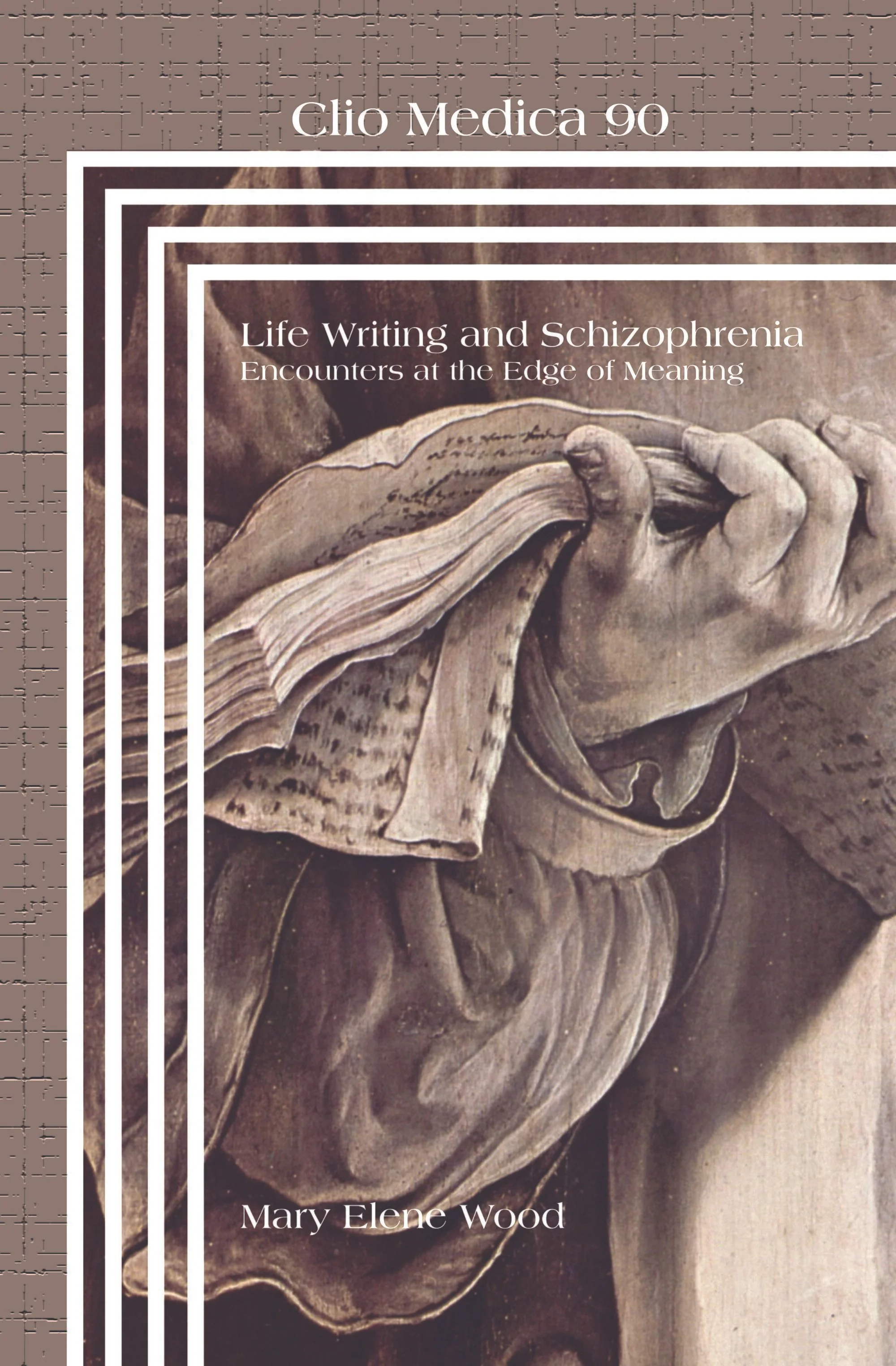
Life Writing and Schizophrenia
Encounters at the Edge of Meaning
How do you write your life story when readers expect you not to make sense? How do you write a case history that makes sense when, face to face with schizophrenia, your ability to tell a diagnostic story begins to fall apart? This book examines work in several genres of life writing–autobiography, memoir, case history, autobiographical fiction–focused either on what it means to live with schizophrenia or what it means to understand and ‘treat’ people who have received that diagnosis. Challenging the romanticized connection between literature and madness, Life Writing and Schizophrenia explores how writers who hear voices and experience delusions write their identities into narrative, despite popular and medical representations of schizophrenia as chaos, violence, and incoherence. The study juxtaposes these narratives to case histories by clinicians writing their encounters with those diagnosed with schizophrenia, encounters that call their own narrative authority and coherence into question.
Published January 1st, 2013
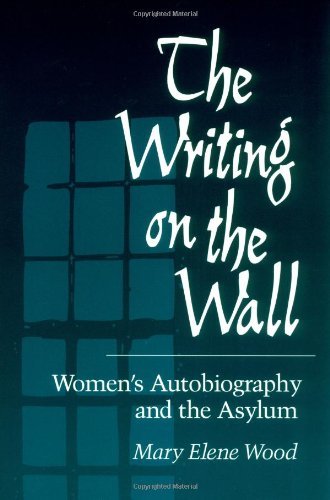
The Writing on the Wall
Women's Autobiography and the Asylum
"She's mad!" But who defines madness? This book uses the autobiographies of five institutionalized women—Elizabeth Packard, Lydia Smith, Clarissa Lathrop, Jane Hillyer, and Zelda Fitzgerald—to explore questions of madness and female identity in late nineteenth- and early twentieth-centery America.
Published December 1st, 1994
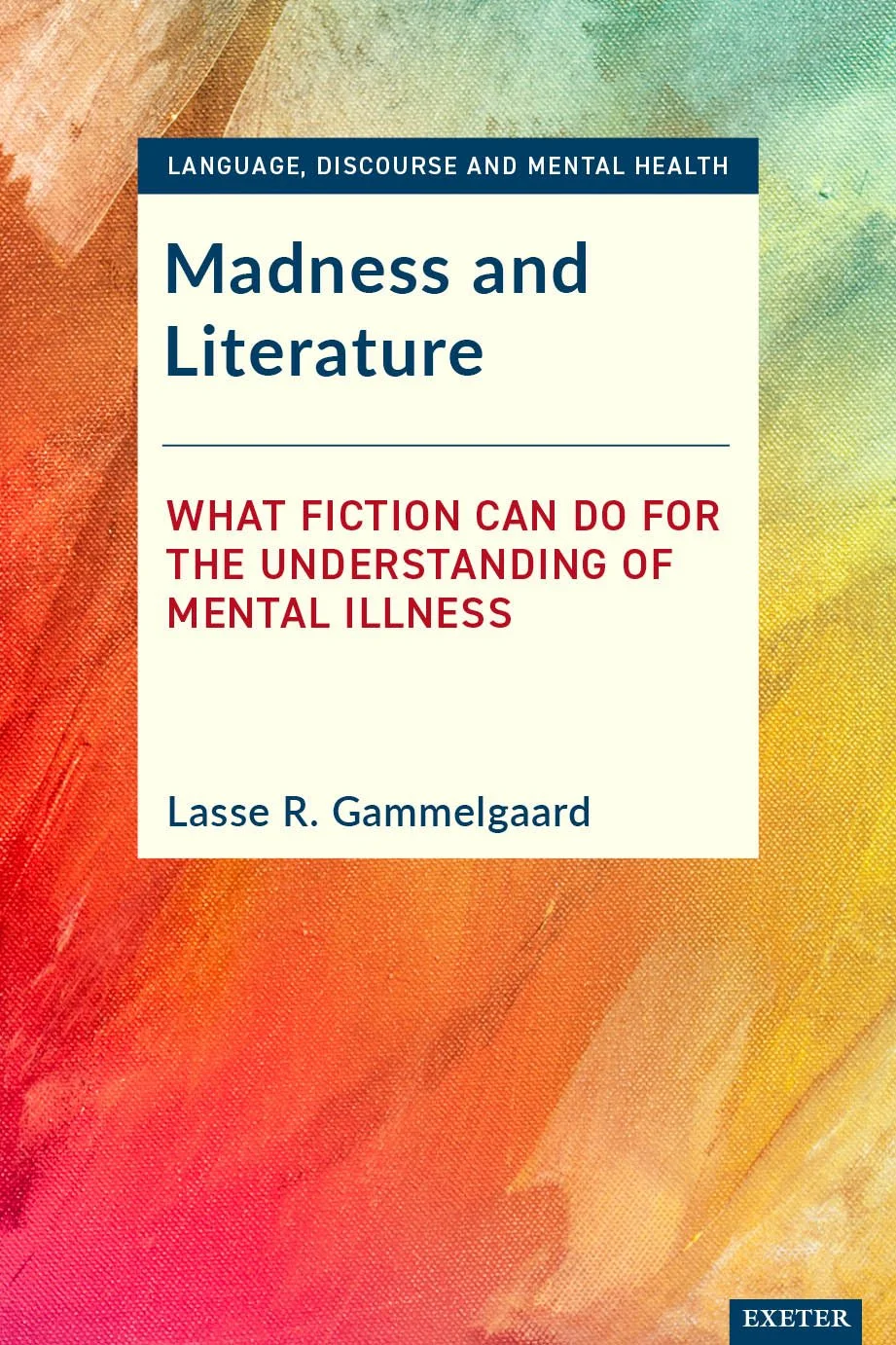
Madness And Literature
What Fiction Can Do for the Understanding of Mental Illness
Mental illness has been a favourite topic for authors throughout the history of literature, while psychologists and psychiatrists such as Sigmund Freud and Karl Jaspers have in turn been interested in and influenced by literature. Pioneers within philosophy, psychiatry and literature share the endeavour to explore and explain the human mind and behaviour, including what a society deems as being outside perceived normality.
Using a theoretical approach that is eclectic and transdisciplinary, this volume engages with literature’s multifarious ways of probing minds and bodies in a state of mental ill health. The cases and the theory are in dialogue with a clinical approach, addressing issues and diagnoses such as trauma, psychosis, bipolar disorder, eating disorders, self-harm, hoarding disorder, PTSD and Digital Sexual Assault.
The chapters in Part I address literary representations of madness with a historical awareness, outlining the socio-political potentials of madness literature. Part II investigates how representations of mental illness in literature can offer unique insights into the subjective experience of alternative states of mind. Part III reflects on how literary cases can be applied to help inform mental health education, how they can be used therapeutically and how they are giving credence to new diagnoses. Throughout the book, the contributors consider how the language and discourses of literature—both stylistically and theoretically—can teach us something new about what it means to be mentally unwell.
-
Part I: Literary History and Socio-Political Perspectives
Layla and Majnun in Historical and Contemporary Conceptions of Madness in Islamic Psychology Alan Weber
The Anti-Psychiatry Ethos in Samuel Beckett’s Murphy Shoshana Benjamin
Apartheid’s Garden: Dismantling Madness in J.M. Coetzee’s Life & Times of Michael K Sebastian C. Galbo
Sniffs and Dribblers: Poppy Shakespeare and the Identities of Madness Clare Allan
Part II: Literary Theory and Experiencing Mental Illness
Reading Shattering Minds and Extended Selves in Virginia Woolf’s Mrs Dalloway Anna Ovaska
Spill the Words: Speechlessness and Creativity in the Writing of Janet Frame Mary Elene Wood
Pronominal Shifts and the Confusion of Self with Not-Self Alice Hervé
Rethinking Clinical and Critical Perspectives on Psychosis in Kathy Acker’s Writing Charley Baker
Countering the DSM in Poetry about Bipolar Disorder Lasse Raaby Gammelgaard
Seeing Feeling: Dissociation and Post-Traumatic Memory in the Graphic Novel Perfect Hair Penni Russon
Part III: Literary Instrumentality and Clinical Psychopathology
Writing Therapy, Writing Data: Therapeutic Writing as a Methodological and Ethical Approach in Researching Digital Sexual Assault Signe Uldbjerg
A Question of Context: Sites for Cultural Negotiation in Narratives of Manic Depression Megan Milota
Conscripting Dante: History, Anachronism, and the Uses of Literary Precedents in the ‘New’ Diagnosis of Hoarding Disorder David Orr
Opening Up the Discourse of Male Eating Disorders: Personal Experience in German and English Narratives Heike Bartel
Published October 3rd, 2022
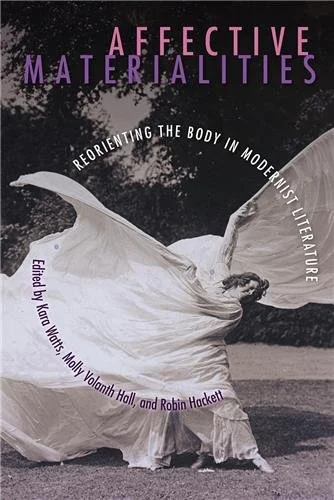
Affective Materialities
Reorienting the Body in Modernist Literature
Affective Materialities reexamines modernist theorizations of the body and opens up the artistic, political, and ethical possibilities at the intersection of affect theory and ecocriticism, two recent directions in literary studies not typically brought into conversation.
Modernist creativity, the volume proposes, may return to us notions of the feeling, material body that contemporary scholarship has lost touch with, bodies that suggest alternative relations to others and to the world. Contributors argue that modernist writers frequently bridge the dichotomy between body and world by portraying bodies that merge with or are re-created by their surroundings into an amalgam of self and place. Chapters focus on this treatment of the body through works by canonical modernists including William Carlos Williams, Virginia Woolf, and E. M. Forster alongside lesser-studied writers Janet Frame, Herbert Read, and Nella Larsen.
Showing the ways the body in literature can be a lens for understanding the fluidities of race, gender, and sexuality, as well as species and subjectivity, this volume maps the connections among modernist aesthetics, histories of the twentieth-century body, and the concerns of modernism that can also speak to urgent concerns of today.
-
Into the Ether: An Invitation to Bodily Reorientations 1 Molly Volanth Hall and Kara Watts
Flesh over Granite: Walt Whitman’s Embodied Presence in William Carlos Williams’s “History” 33 Karen Guendel
E. M. Forster among the Ruins 55 Stuart Christie
“‘I’m not sick,’ I said. ‘I’m wounded’”: Disrupting Wounded Masculinity through the Lyrical Spaces of War 79 Cheryl Hindrichs
Frustrated Energies in Modernism’s Female Arrangements 103 Judith Paltin
“Things were in people, people were in things”: Language, Ecology, and the Body in H.D. 123 Kim Sigouin
Cold Crystal: The Ecology of Affect in Herbert Read’s The Green Child 147 William Kupinse
“I wanna be your puppy”: Djuna Barnes’s Nightwood and the Queer Cute Body 172 Anna Christine
The Brain and the Living World in Janet Frame’s Faces in the Water 192 Mary Elene Wood
“Becoming Animal, Becoming Other”: Modernism, Millennial Jurisprudence, and the Limits of Materialist Subjectivity 213 Kathryn Van Wert
Black Girls and Lady Police: Blank Affect and the Ecology of the Gym 236 Robin Hackett
Published April 2nd, 2019